One-Page Learn · The Halachos at a glance
הִלְכוֹת בֵּית הַבְּחִירָה
The Chosen Temple · Chapters 2–4
1
Fixed altar site,
never moved
never moved
42
Menorah ornaments
22 · 11 · 9
22 · 11 · 9
100³
Cubits: the Second
Temple building
Temple building
4
Altar must-haves,
or it is invalid
or it is invalid
Ch 2The Altar
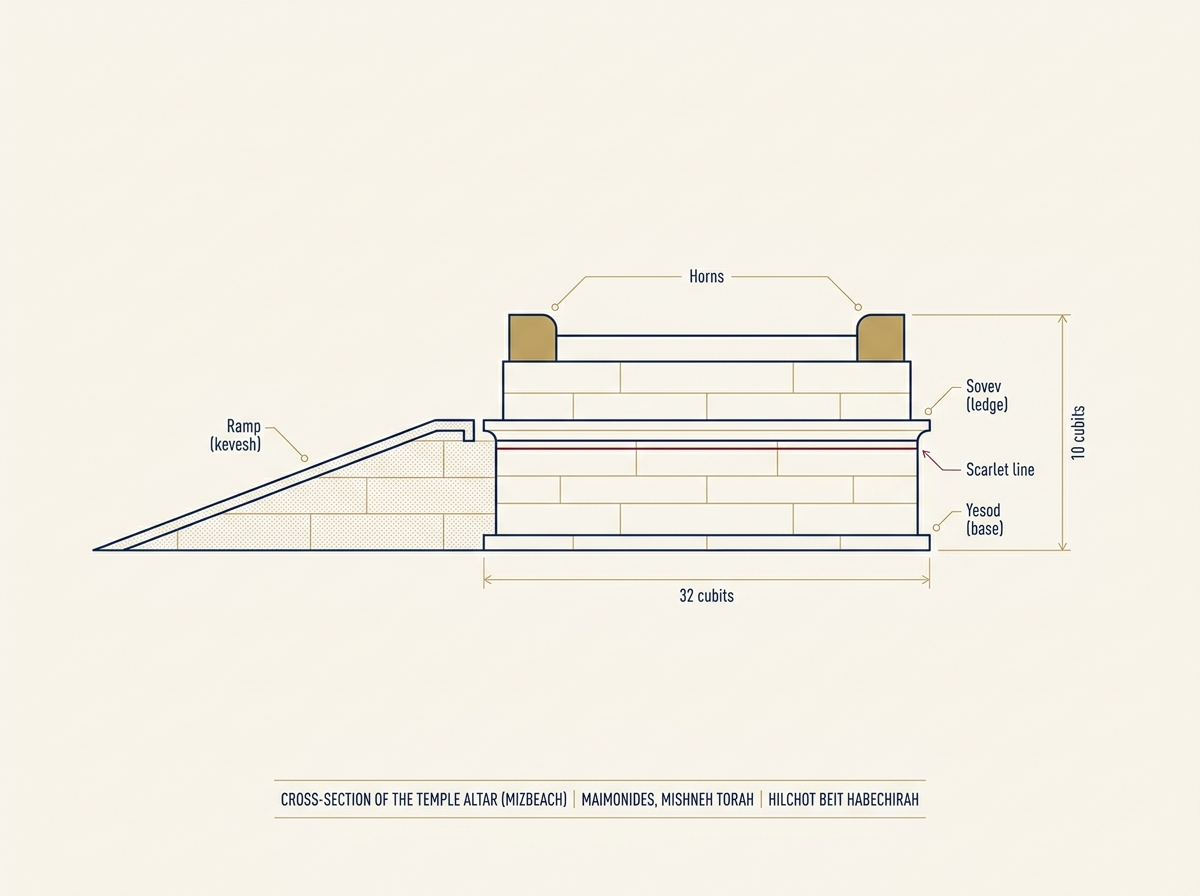
- One unchangeable place. The Altar stands in a single exact spot that may never move - where Abraham bound Isaac, and Adam, Noah, Cain and Abel offered. (2:1-2)
- Fixed by tradition. Its dimensions may not be added to or reduced; returning prophets attested to its site and size. (2:3-4)
- Built in tiers. A base (yesod), a surrounding ledge (sovev), and the top pyre surface; a scarlet band marks upper vs. lower blood. (2:5-10)
- One solid block. Whole stones, never touched by iron, bound with lime, pitch and lead - no hollow inside. (2:16)
RememberFour non-negotiables, or the Altar is invalid: Horns · Base · Ramp · Square.
Ch 3The Menorah, Table & Vessels
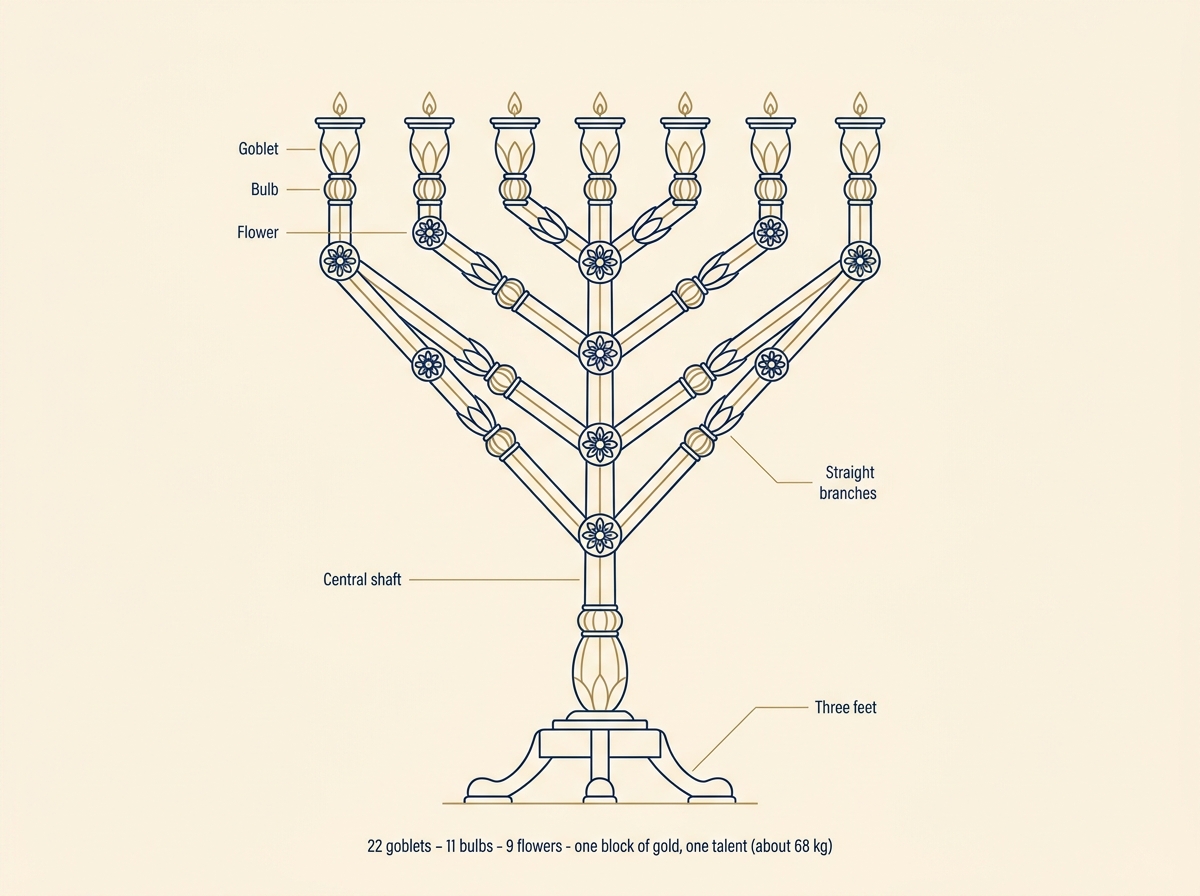
- Exact count, or invalid. 22 goblets, 11 bulbs, 9 flowers - 42 ornaments; if one is missing the whole Menorah is unfit. (3:1-3)
- One block of gold. Hammered from a single piece, one talent (~68 kg) with its lamps - not assembled, not hollow, never from fragments. (3:4-5)
- The Showbread Table. Gold side-frames and 28 gold rods hold two stacks of twelve loaves; two hall tables (marble in, gold out). (3:12-16)
- Incense altar & washbasin. A one-cubit incense altar between Table and Menorah; a basin with twelve taps for a whole shift of priests. (3:17-18)
RememberOne block, one talent, and the count 22 · 11 · 9 - lose one ornament, lose them all.
Ch 4The Holy of Holies & the Building
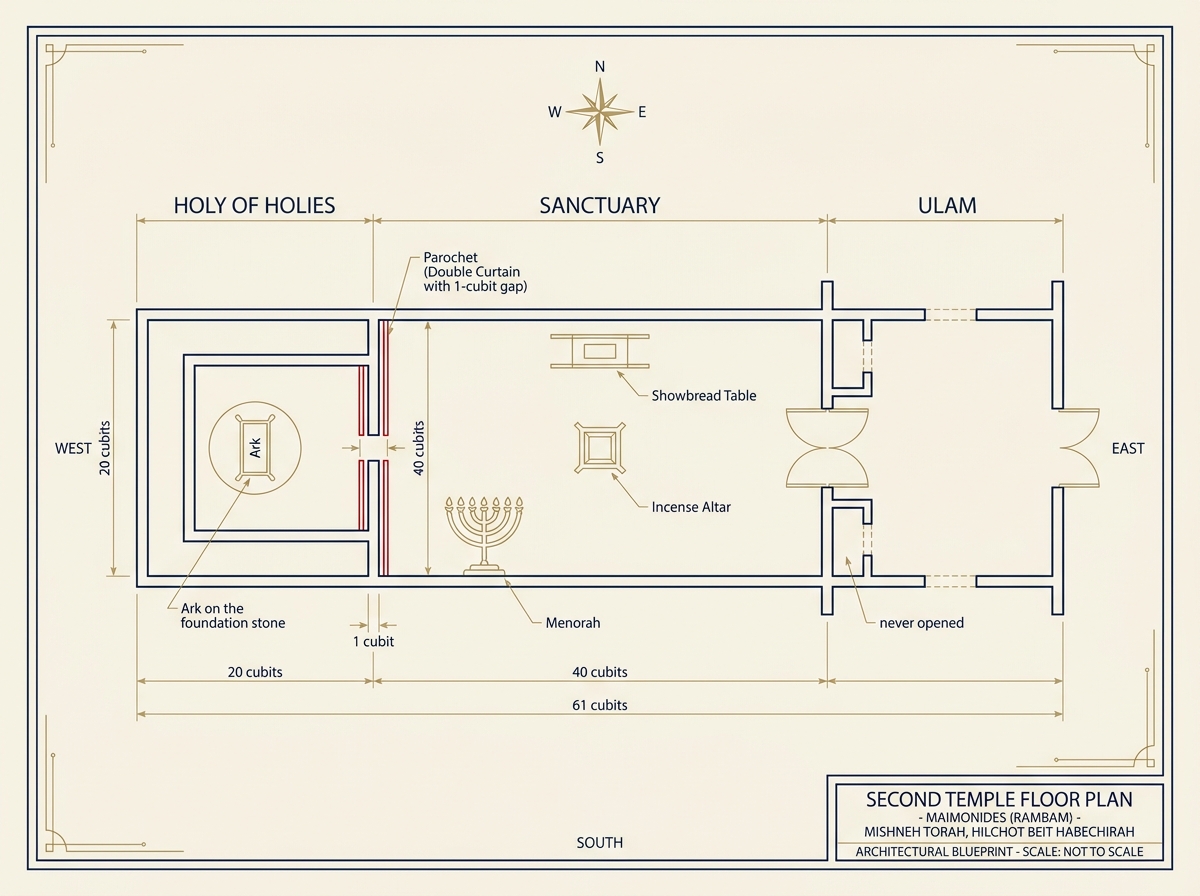
- The Ark on the foundation stone. It rests on the Even ha-Shtiyah in the western Holy of Holies - the stone from which the world was founded. (4:1)
- The hidden Ark. Josiah entombed it in Solomon's vault; the Ark, manna, Aaron's staff and Urim v'Tumim did not return in the Second Temple. (4:1)
- The divider. A stone wall in the First Temple; two curtains a cubit apart in the Second. (4:2)
- 100 by 100 by 100. Inside, east to west: Holy of Holies 20, curtain gap 1, Sanctuary 40. Two side-wickets flank the great gate - the southern never opens. (4:3-7)
RememberA 100-cubit cube; the innermost 20 holds the Ark on the world's foundation stone.
◆ ◆ ◆
Mishneh Torah, Hilchot Beit HaBechirah, Chapters 2-4. A study overview, not a halachic ruling - consult a competent rav for practical questions.